
Bare Engine vs Complete Engine: Which Should You Buy? Price, Labour & Smart Savings
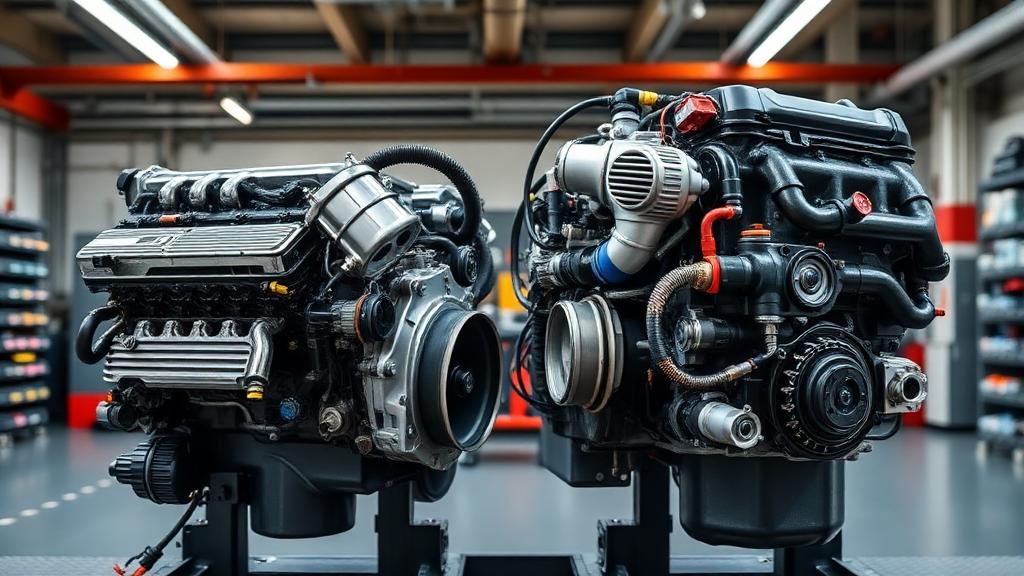
When your engine fails and replacement is the best option, one of the first decisions you'll face is: should I buy a bare engine or a complete engine? The answer depends on the condition of your existing auxiliary components, your budget, and how much you're willing to spend on labour. Let's break it down.
What Is a Bare Engine?
A bare engine (also called a "long block" or "short block" depending on configuration) is the core engine assembly — the block, crankshaft, pistons, cylinder head(s), and internal components — but without any auxiliary parts attached. This means no:
- Injectors
- Turbocharger
- Alternator
- Starter motor
- Fuel pump (high-pressure or mechanical)
- Power steering pump
- AC compressor
- Intake manifold (in some cases)
- Exhaust manifold
- Sensors, wiring harness, and brackets
All of these components must be transferred from your old engine to the replacement bare engine during installation.
What Is a Complete Engine?
A complete engine arrives with all or most auxiliary components already fitted — injectors, turbo, alternator, fuel pump, starter, and other ancillaries. It's essentially a ready-to-install unit that requires minimal parts transfer from the old engine.
Price Difference: Bare vs Complete Engine
On average, a complete engine costs approximately 30% more than the equivalent bare engine. For example:
- Bare engine: €1,500
- Complete engine: €1,950 (30% more)
At first glance, the bare engine looks like the obvious money-saver. But the real cost picture is more nuanced.
The Hidden Cost of Buying a Bare Engine: Labour
When you buy a bare engine, your mechanic must:
- Remove all auxiliary components from the failed engine — injectors, turbo, alternator, fuel pump, starter motor, AC compressor, sensors, brackets, hoses, and wiring
- Inspect each component for wear, damage, or failure
- Clean and prepare each part for reinstallation
- Transfer and install every component onto the new bare engine
- Test connections — electrical, fuel, coolant, and vacuum lines
This stripping and rebuilding process can add 4–8 hours of additional labour compared to installing a complete engine. At typical European workshop rates of €60–100/hour, that's an extra €240–800 in labour costs alone.
Suddenly, the 30% savings on the engine price can be partially — or even fully — offset by higher installation costs.
Risk Factor: Component Condition
There's another important consideration: the condition of the parts you're transferring. If your old engine failed catastrophically — for example, due to timing chain failure, turbo disintegration, or coolant mixing with oil — some of the auxiliary components may be damaged or contaminated:
- Injectors may have been affected by metal debris in the fuel system
- Turbocharger may have oil seal damage or shaft play
- Fuel pump may have internal wear from contaminated fuel
- Alternator and starter may have heat damage from overheating events
If any of these parts fail shortly after installation, you'll face additional repair costs and downtime. With a complete engine, these risks are significantly reduced because the auxiliary components are already tested and matched to the engine.
When a Bare Engine Is the Smart Choice
Buying a bare engine makes excellent financial sense when:
- Your auxiliary components are in good condition — if the engine failure was isolated (e.g., worn bearings, piston ring failure, head gasket) and ancillaries are unaffected
- You have a trusted mechanic with experience in component transfer who charges reasonable rates
- Your vehicle is older or lower-value, and minimising upfront cost is the priority
- You already have spare or upgraded parts (e.g., new injectors, rebuilt turbo) ready to install
In these scenarios, a bare engine can save you 15–25% on the total job cost compared to buying a complete engine.
When a Complete Engine Is the Better Investment
A complete engine is often the smarter choice when:
- The old engine suffered catastrophic failure — metal contamination, turbo disintegration, or overheating may have damaged auxiliary components
- You want minimal risk and faster turnaround — fewer parts to transfer means less labour time and fewer potential issues
- Workshop labour rates are high — in high-cost markets, the extra labour to strip and rebuild a bare engine can exceed the price difference
- You're unsure about the condition of your old ancillaries — if the turbo, injectors, or fuel pump haven't been serviced recently, buying them as part of a complete engine is safer
Cost Comparison Summary
Let's look at a realistic example for a typical 2.0L diesel engine replacement:
| Cost Factor | Bare Engine | Complete Engine |
|---|---|---|
| Engine price | €1,500 | €1,950 |
| Labour (engine swap) | €800 | €800 |
| Labour (component transfer) | €400–600 | €0 |
| Risk of ancillary failure | Medium–High | Low |
| Total estimated cost | €2,700–2,900 | €2,750 |
As you can see, the total cost can be very similar — and with a complete engine, you get lower risk and faster turnaround.
Our Recommendation at Motuvo.eu
At Motuvo.eu, we offer both bare and complete engines for all major vehicle brands. Our advice to customers:
- If your ancillaries are confirmed good and you have a skilled mechanic — go with a bare engine and save money
- If you want peace of mind and the fastest possible repair — choose a complete engine
- Always discuss with your mechanic before ordering — they can inspect your old components and advise on the best option
Every engine from Motuvo.eu comes with warranty coverage, whether bare or complete. Browse our engine catalogue or contact our team for a personalised recommendation.