
Land Rover & Range Rover Engine Guide: PT204, 204DTD, 306DT, 448DT — Reliability, Weak Points & Service Requirements
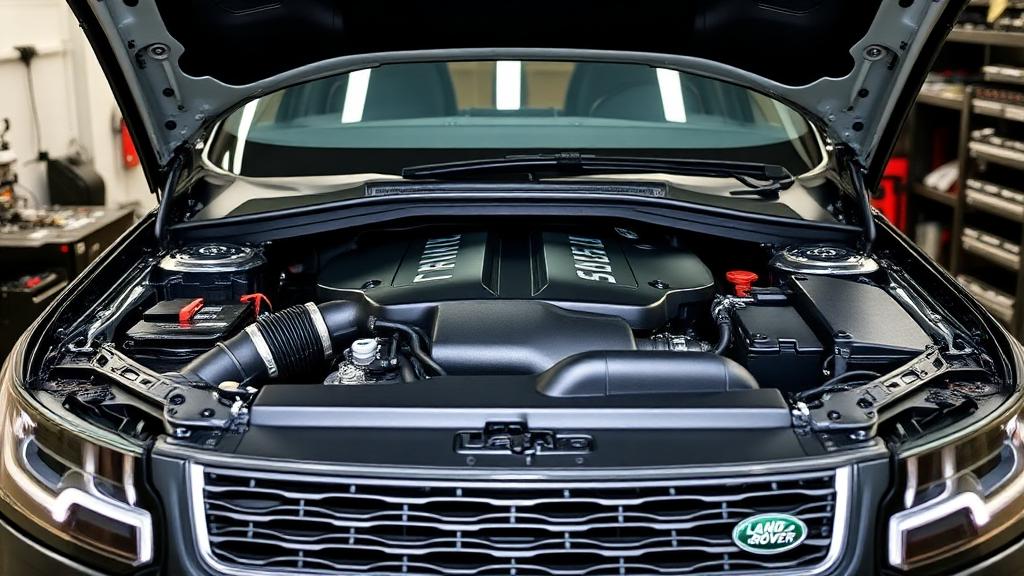
Land Rover and Range Rover vehicles are synonymous with luxury, capability, and engineering ambition. But beneath the premium badge lies a range of engines with very different reputations for reliability and longevity. Whether you're buying a used Discovery Sport, a Range Rover Velar, or a full-size Range Rover, understanding the engine is critical to making a smart purchase — and keeping it running.
This guide covers the four most important modern Land Rover engine families: the 2.0 petrol PT204, 2.0 diesel 204DTD, 3.0 diesel 306DT (including all generations), and 4.4 diesel 448DT. We'll examine their weak points, strengths, service requirements, and when replacement becomes the smarter option.
2.0 Petrol Ingenium PT204 — The Turbocharged Four-Cylinder
Overview
The PT204 is Jaguar Land Rover's 2.0-litre four-cylinder turbocharged petrol engine from the Ingenium family. Available in various power outputs from 200 PS to 300 PS (in the P300 twin-scroll turbo variant), it powers the Discovery Sport, Range Rover Evoque, Range Rover Velar, and Jaguar E-Pace/F-Pace.
Strong Points
- Lightweight aluminium construction — reduces overall vehicle weight compared to the older 3.0 V6
- Good power-to-weight ratio — the P300 variant delivers strong performance for a 4-cylinder
- Modern engineering — electrohydraulic valvetrain, twin-scroll turbo (P300), continuous variable valve timing
- Lower emissions — meets Euro 6d and helps with road tax in many European countries
- 48V mild-hybrid option (MHEV) available in later models for improved fuel efficiency
Weak Points & Common Problems
- Timing chain tensioner issues — early production PT204 engines (2017–2019) suffered from premature timing chain stretch and tensioner failure, causing rattling on cold start and potentially catastrophic valve damage
- Excessive oil consumption — some owners report oil consumption of 1 litre per 3,000–5,000 km, particularly in higher-output P300 variants
- Turbocharger failures — the twin-scroll turbo on P300 models can fail between 80,000–120,000 km due to oil coking and bearing wear
- Coolant leaks — water pump and thermostat housing failures are common, often leading to overheating if not caught early
- Carbon buildup on intake valves — as a direct-injection engine, carbon deposits accumulate on intake valves, causing rough idle and misfires over time
Service Requirements
- Oil change: every 10,000 km (JLR recommends up to 21,000 km, but we strongly advise shorter intervals)
- Timing chain inspection: every 100,000 km — listen for cold-start rattle as an early warning
- Spark plugs: every 60,000 km
- Coolant system check: every service — check water pump and thermostat housing for leaks
- Carbon cleaning: recommended every 60,000–80,000 km for direct-injection variants
Expected Lifespan
With proper maintenance (10,000 km oil changes, early timing chain attention): 200,000–280,000 km. Neglected examples can fail as early as 100,000 km.
2.0 Diesel Ingenium 204DTD — The Workhorse Four-Cylinder Diesel
Overview
The 204DTD is JLR's 2.0-litre four-cylinder diesel Ingenium engine, replacing the problematic Ford/PSA-sourced 2.2 SD4. Available in outputs from 150 PS (D150) to 240 PS (D240), it's found in the Discovery Sport, Range Rover Evoque, Range Rover Velar, Jaguar XE, XF, and E-Pace.
Strong Points
- Significant improvement over the 2.2 SD4 — better NVH (noise, vibration, harshness), more power, better fuel economy
- Robust bottom end — the crankshaft and bottom-end bearing design is much improved over the predecessor
- Good torque delivery — 430 Nm in D240 variant, excellent for towing and off-road use
- Aluminium block — lighter than previous iron-block diesels
- Twin-turbo option (D240) for stronger mid-range performance
Weak Points & Common Problems
- Crankshaft bearing wear — while improved over the 2.2, early 204DTD engines (2015–2018) still experienced premature bearing wear, especially with extended oil change intervals
- DPF regeneration issues — short trips and city driving cause frequent DPF blockages. Failed regeneration leads to limp mode and expensive DPF replacement (€1,500–3,000)
- EGR valve failure — carbon buildup clogs the EGR valve, causing rough running, black smoke, and check engine lights. Common between 60,000–100,000 km
- Injector failures — piezo injectors can fail or leak, causing rough running, white smoke, and diesel smell. Replacement cost: €300–500 per injector
- AdBlue system faults — SCR (Selective Catalytic Reduction) system sensors and pumps fail, triggering warning messages and potential no-start conditions after countdown timers expire
- Oil dilution from failed DPF regeneration — diesel entering the sump during incomplete regen cycles dilutes the oil, accelerating bearing wear
Service Requirements
- Oil change: every 10,000 km with approved low-SAPS oil (critical for DPF longevity)
- Fuel filter: every 30,000 km
- DPF health check: every service — monitor soot loading levels via diagnostic tool
- EGR cleaning: every 60,000–80,000 km
- AdBlue top-up: every 10,000–15,000 km depending on driving style
- Timing belt: the 204DTD uses a timing belt (not chain) — replace every 150,000 km or 10 years
Expected Lifespan
With diligent maintenance: 220,000–300,000 km. DPF and injector-related issues are the most common reasons for early replacement.
3.0 Diesel TDV6 / SDV6 — 306DT Engine Family (All Generations)
Overview
The 306DT is a 3.0-litre V6 diesel engine developed jointly by Ford and PSA (Peugeot-Citroën), known internally as the "Lion" engine. It has been used across the Land Rover range since 2009 in multiple generations:
- Gen 1 (2009–2013) — TDV6, single-turbo 211 PS and twin-turbo SDV6 256 PS. Found in Discovery 4, Range Rover Sport L320
- Gen 2 (2013–2016) — revised internals, improved emissions. Found in Discovery 4 facelift, Range Rover Sport L494, Range Rover L405
- Gen 3 (2016–2020) — further emissions updates, SCR (AdBlue) system added. Found in Discovery 5, Range Rover Sport, Range Rover, and Range Rover Velar
Strong Points
- Excellent torque — 600 Nm in SDV6 variants, superb for towing (3,500 kg capacity)
- Smooth V6 character — refined, quiet, and well-suited to luxury vehicles
- Proven platform — millions produced across Jaguar, Land Rover, Citroën, and Peugeot applications
- Good fuel economy for the class — 8–10 L/100 km in mixed driving for a 2.2-tonne vehicle
- Strong aftermarket support — widely available parts and specialist knowledge
Weak Points & Common Problems
Gen 1 (2009–2013) — Most Problematic
- Crankshaft bearing failure — the most infamous 306DT problem. Inadequate oil supply to crankshaft bearings causes progressive wear, knocking, and eventual catastrophic failure. This is the #1 reason for 306DT engine replacements at Motuvo.eu
- Crankcase breather failure — causes oil leaks, excessive crankcase pressure, and turbo seal failures
- Oil cooler leaks — allows coolant to mix with oil, destroying bearings rapidly
- Turbo actuator failure — causes limp mode and loss of power
Gen 2 (2013–2016) — Improved but Not Perfect
- Reduced crankshaft issues — improved oil passages and bearing specification, but not eliminated
- Timing chain stretch — chains can stretch between 150,000–200,000 km, causing timing faults
- DPF blockage — particularly in vehicles used primarily for short urban journeys
- EGR cooler failure — can crack and leak coolant into the intake, causing white smoke and overheating
Gen 3 (2016–2020) — Best of the Line
- Most reliable generation — further improved bearings and oil system
- AdBlue system complexity — adds another potential failure point with SCR sensors, injector, and pump
- Still susceptible to oil quality issues — extended oil change intervals remain the biggest enemy
Service Requirements
- Oil change: every 10,000 km maximum (this is the single most important factor for 306DT longevity)
- Oil cooler inspection: every 60,000 km — check for coolant contamination in oil
- Crankcase breather valve: replace every 80,000–100,000 km
- Timing chain inspection: every 120,000 km
- Turbo actuator check: at every service — test boost pressure and actuator response
- DPF forced regen: if mainly city driving, perform a diagnostic regen every 10,000 km
Expected Lifespan
- Gen 1: 120,000–200,000 km (high failure rate, especially with 20,000+ km oil intervals)
- Gen 2: 180,000–280,000 km
- Gen 3: 200,000–320,000 km with proper maintenance
4.4 Diesel TDV8 / SDV8 — 448DT Engine
Overview
The 448DT is the 4.4-litre V8 twin-turbo diesel engine, also from the Ford/PSA partnership. It's the flagship diesel powerplant for the Range Rover and Range Rover Sport, producing 339 PS (TDV8) or 339 PS with higher torque in SDV8 guise — delivering up to 740 Nm of torque.
Strong Points
- Extraordinary torque — 700–740 Nm provides effortless acceleration even in a 2.5-tonne Range Rover
- Supreme refinement — whisper-quiet at cruise, perfectly matched to the Range Rover's luxury character
- Massive towing capacity — rated for 3,500 kg
- Impressive highway fuel economy — 9–11 L/100 km at constant speed despite the displacement
- Prestige factor — the V8 diesel is the engine of choice for Range Rover owners who want diesel economy with V8 smoothness
Weak Points & Common Problems
- Crankshaft bearing failure — shares the same fundamental weakness as the 306DT, amplified by higher loads. Bearing wear from oil degradation or coolant contamination is the primary failure mode
- Oil cooler failure — the engine-mounted oil cooler can leak coolant into the oil system, contaminating bearings. This is often the root cause of crankshaft failure
- Turbocharger failures — twin turbo setup doubles the potential failure points. Turbo oil feed pipe coking and bearing wear cause oil smoke and loss of boost
- Injector failures — eight injectors mean higher probability and cost. Replacement of all 8 injectors: €2,400–4,000
- Timing cover oil leaks — the front timing cover gasket weeps oil, a known design weakness
- High repair costs — every component is more expensive due to V8 complexity. Labour times for turbo removal, injector replacement, or timing chain work are significantly higher than on 4-cylinder engines
- DPF and AdBlue system failures — large DPF is expensive to replace (€2,000–4,000), and AdBlue system faults are common in Gen 3 vehicles
Service Requirements
- Oil change: every 10,000 km with manufacturer-approved oil (absolutely non-negotiable for this engine)
- Oil cooler inspection: every 50,000 km — check for coolant-oil cross-contamination
- Turbo oil feed lines: inspect every 80,000 km, replace if coked
- Injector back-leak test: every 60,000 km to identify failing injectors before they cause further damage
- Timing cover reseal: typically needed between 100,000–150,000 km
- Coolant system: full flush every 4 years; inspect all hoses and connections
Expected Lifespan
With meticulous maintenance: 180,000–280,000 km. However, neglected 448DT engines can suffer catastrophic crankshaft failure as early as 80,000–120,000 km. The oil cooler is the critical component — if it leaks coolant into oil undetected, the engine can be destroyed within a few thousand kilometres.
Comparing All Land Rover Engine Options
| Feature | PT204 (2.0 Petrol) | 204DTD (2.0 Diesel) | 306DT (3.0 Diesel) | 448DT (4.4 Diesel) |
|---|---|---|---|---|
| Power range | 200–300 PS | 150–240 PS | 211–306 PS | 339 PS |
| Torque | 320–400 Nm | 380–430 Nm | 520–600 Nm | 700–740 Nm |
| Reliability rating | ★★★☆☆ | ★★★★☆ | ★★★☆☆ (Gen1) ★★★★☆ (Gen3) | ★★★☆☆ |
| Main weakness | Timing chain, turbo | DPF, EGR, injectors | Crankshaft bearings | Oil cooler, crank bearings |
| Service cost (annual) | €600–1,000 | €500–900 | €700–1,200 | €900–1,500 |
| Expected lifespan | 200,000–280,000 km | 220,000–300,000 km | 120,000–320,000 km | 180,000–280,000 km |
The Golden Rule for All Land Rover Engines: Oil Change Intervals
If there is one single takeaway from this guide, it's this: change your oil every 10,000 km. Land Rover's official service intervals of 21,000 km or even 34,000 km (for some markets) are too long for these engines. Every engine failure pattern described above — crankshaft bearing wear, turbo failure, timing chain stretch — is directly accelerated by degraded oil.
The cost of an oil change every 10,000 km is approximately €80–120. The cost of an engine replacement is €3,000–8,000+. The maths speaks for itself.
When to Replace Your Land Rover Engine
Consider engine replacement when:
- Compression test shows low values on multiple cylinders
- Crankshaft knock or bearing noise is confirmed
- Oil cooler has leaked coolant into the oil (even if caught early, internal damage may already exist)
- Repair quotes exceed 50–60% of replacement engine cost
- Multiple systems are failing simultaneously (turbo + DPF + injectors)
Find Your Replacement Land Rover Engine at Motuvo.eu
At Motuvo.eu, we carry a comprehensive stock of Land Rover and Range Rover engines — including PT204, 204DTD, 306DT (all generations), and 448DT units. Every engine is:
- Compression tested before sale
- Supplied with warranty
- Available as bare or complete units
- Shipped securely on pallets across the EU and UK
Don't let a failed engine write off your Land Rover. A quality replacement engine can give your vehicle another 200,000+ km of life at a fraction of a new vehicle's cost. Browse Land Rover engines or contact our team for expert advice and a personalised quote.