
10 Warning Signs Your Car Engine Needs Replacing — When Repair Is No Longer Worth It
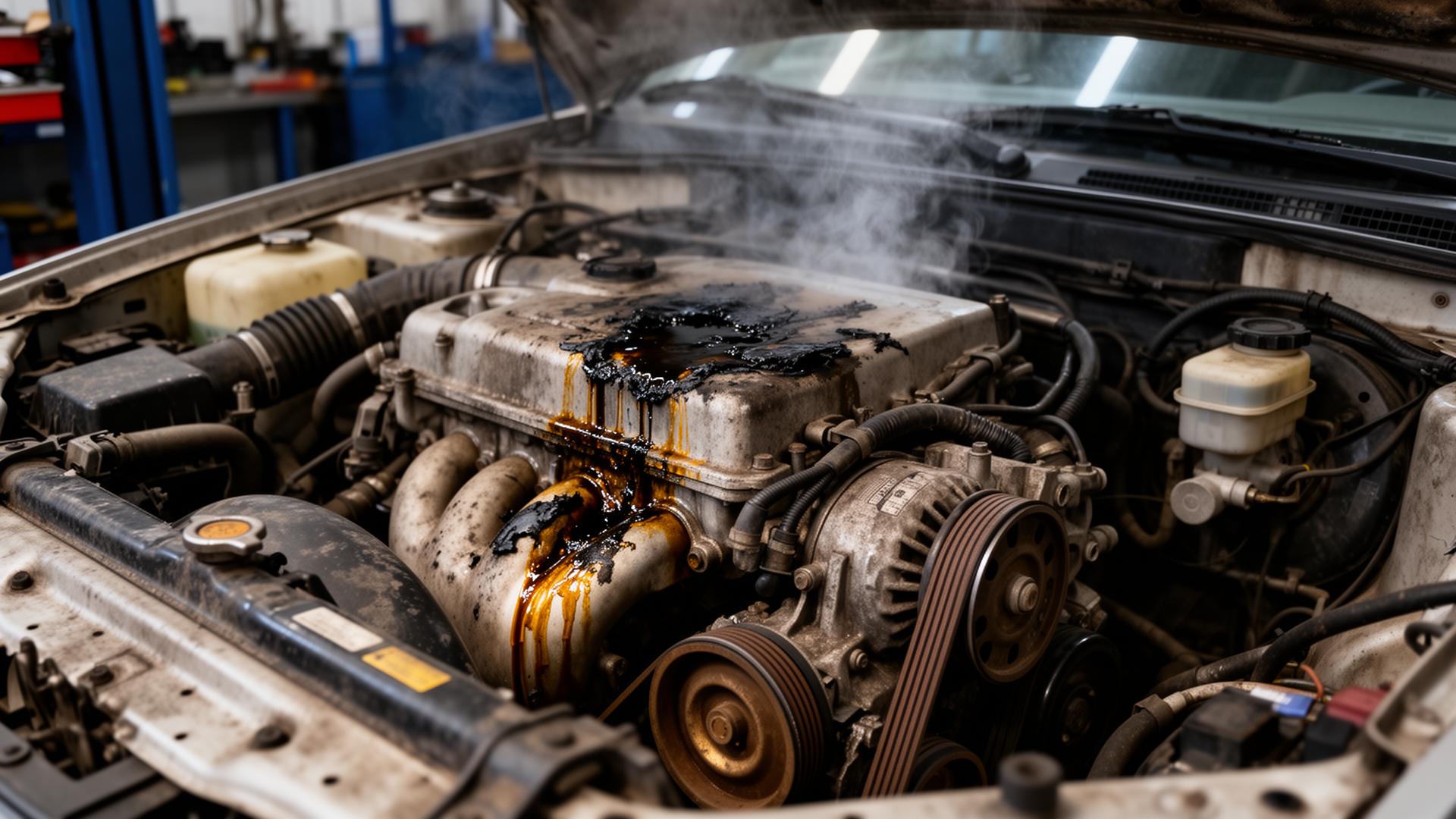
Every car engine has a finite lifespan. Whether it's a BMW diesel, a Mercedes petrol engine, or a Volkswagen TDI, sooner or later every engine reaches a point where repair costs exceed the value of the fix. The key is recognising when that moment arrives — before you throw good money after bad. This guide covers the critical warning signs that your car engine needs replacing, what to expect from different brands, and how to make the right decision.
1. Knocking or Tapping Noise from the Engine
A persistent engine knocking noise — especially a deep, rhythmic knock that gets louder under load — is one of the most serious warning signs. This typically indicates:
- Worn crankshaft bearings (con-rod or main bearings) — the most common cause of engine knocking
- Piston slap — worn pistons hitting the cylinder walls with excessive clearance
- Damaged connecting rod — can lead to catastrophic engine failure if ignored
If your mechanic confirms bearing or crankshaft damage, the repair cost often exceeds €2,000–4,000 for parts and labour — at which point a quality replacement engine becomes the smarter investment.
2. Excessive Oil Consumption
If your engine is burning oil faster than normal — requiring top-ups every 1,000–2,000 km instead of between scheduled oil changes — this signals internal wear:
- Worn piston rings — allowing oil to enter the combustion chamber
- Valve stem seal failure — common in older BMW N-series and Mercedes M-series engines
- Cylinder bore wear — the cylinder walls are too worn to maintain proper compression
Blue or grey smoke from the exhaust on startup or acceleration confirms oil burning. If consumption exceeds 1 litre per 1,000 km, the engine is typically beyond economical repair.
3. Low Compression on Multiple Cylinders
A compression test is the most definitive way to assess engine health. Healthy compression values are typically 10–14 bar for petrol engines and 20–30 bar for diesel engines. Warning signs include:
- Compression below minimum specification on two or more cylinders
- More than 10% variation between cylinders
- Wet compression test showing improvement (confirms ring wear rather than valve issues)
Low compression means the engine can no longer produce proper power or burn fuel efficiently. When multiple cylinders are affected, a replacement engine is almost always more cost-effective than an internal rebuild.
4. Persistent Overheating Despite Repairs
If your engine keeps overheating even after replacing the thermostat, water pump, radiator, and hoses, the problem may be internal:
- Blown head gasket — allowing coolant to mix with oil or enter the combustion chamber
- Cracked cylinder head — common in aluminium heads that have been overheated
- Warped engine block — in severe cases, the block itself is damaged beyond repair
A head gasket failure on its own can be repaired for €800–1,500. But if the head is cracked or the block is warped, the total repair cost approaches or exceeds the price of a replacement engine — with far less risk.
5. White or Milky Substance Under the Oil Cap
Opening the oil filler cap and finding a creamy, milky residue (often called "mayonnaise") is a classic sign of coolant mixing with engine oil. This is almost always caused by:
- Head gasket failure
- Cracked cylinder head or block
- Failed oil cooler (in some designs)
Driving with coolant-contaminated oil causes rapid bearing wear and engine seizure. If this condition has persisted for any significant time, internal damage is likely extensive.
6. Metal Shavings in the Oil
During an oil change, if your mechanic finds metal particles or shavings in the old oil or on the oil filter, this indicates active internal destruction:
- Bearing material breaking down
- Camshaft or crankshaft surface damage
- Timing chain components disintegrating
Metal in the oil is an urgent warning sign. The engine is actively destroying itself, and continued driving will only cause more damage. At this stage, engine replacement is almost certainly the only viable option.
7. Severe Loss of Power
A noticeable drop in engine performance — struggling to accelerate, inability to maintain highway speeds, or feeling sluggish under load — can indicate:
- Low compression due to internal wear
- Turbocharger failure (in turbocharged engines)
- Timing chain/belt issues affecting valve timing
- Blocked catalytic converter or DPF (less severe, but should be ruled out first)
If external causes (turbo, DPF, sensors) have been eliminated and the engine itself is the problem, replacement becomes the logical next step.
8. Excessive Exhaust Smoke
Different exhaust smoke colours indicate different problems:
- Blue smoke — burning oil (worn rings, valve seals, or turbo seals)
- White smoke (thick, persistent) — coolant entering the combustion chamber (head gasket, cracked head)
- Black smoke (diesel) — over-fuelling, injector problems, or turbo issues
Occasional puffs on cold start may be minor, but continuous heavy smoke under normal driving conditions points to serious internal problems.
9. Engine Warning Light Won't Clear
A check engine light that keeps returning after clearing — especially with fault codes related to misfires, compression, camshaft/crankshaft correlation, or oil pressure — suggests problems that can't be fixed without major internal work. Common persistent codes on failing engines include:
- P0300–P0304 — random or specific cylinder misfires
- P0016–P0019 — camshaft/crankshaft position correlation
- P0520/P0524 — oil pressure sensor/switch issues (when confirmed as actual low oil pressure)
10. Repair Costs Exceeding Engine Replacement Cost
The most practical sign that you need a new engine is simple maths. When the combined cost of pending repairs — timing chain, bearings, head gasket, machining — exceeds 50–70% of a replacement engine cost, replacement is the smarter financial decision. A quality used or rebuilt engine comes with warranty, known condition, and typically costs less than a major internal rebuild.
Engine Life Expectancy by Brand
How long should a car engine last? Here's what we see at Motuvo.eu based on thousands of engines:
- BMW — N47/B47 diesel: 150,000–250,000 km; B58 petrol: 250,000+ km; N63 V8: 100,000–180,000 km
- Mercedes-Benz — OM651 diesel: 200,000–350,000 km; M271 petrol: 180,000–280,000 km
- Volkswagen/Audi — EA888 2.0 TSI: 200,000–300,000 km; 1.9 TDI: 350,000–500,000+ km
- Land Rover — 2.2 TD4: 120,000–200,000 km; Ingenium 2.0: 150,000–250,000 km
- Toyota — Most engines: 300,000–500,000+ km with proper maintenance
- Ford — 1.0 EcoBoost: 150,000–250,000 km; 2.0 TDCi: 250,000–350,000 km
These figures assume regular oil changes every 10,000 km and proper maintenance. Neglected engines can fail at half these mileages.
Repair vs Replace: Making the Right Decision
Use this quick decision framework:
- Choose repair when: The problem is isolated (single component), engine has low mileage, and total repair cost is under €1,500
- Choose replacement when: Multiple internal issues exist, mileage is high, repair quotes exceed €2,500, or the diagnosis includes crankshaft/bearing/block damage
- Always get a compression test before committing to either option — it's the most honest indicator of engine health
Find Your Replacement Engine at Motuvo.eu
If the signs point to engine replacement, Motuvo.eu makes the process straightforward. We offer:
- Tested used engines — every engine is compression tested and inspected before sale
- Rebuilt engines — restored to OEM specifications with 12-month warranty
- Bare and complete options — choose based on your needs and budget
- 40+ vehicle brands — BMW, Mercedes, VW, Audi, Land Rover, Ford, Toyota and more
- Fast EU-wide delivery — securely packed on pallets with tracking
Don't wait until a failing engine leaves you stranded. If you're seeing two or more of the warning signs above, it's time to act. Browse our engine catalogue or contact our team for expert advice and a personalised quote.